
Appetite & Cravings
What Is Food Noise? How GLP-1 Medications May Help Quiet Constant Food Thoughts
If you can't stop thinking about food — even when you're not hungry — you may be experiencing food noise. Here's what it is and how physician-guided treatment may help.
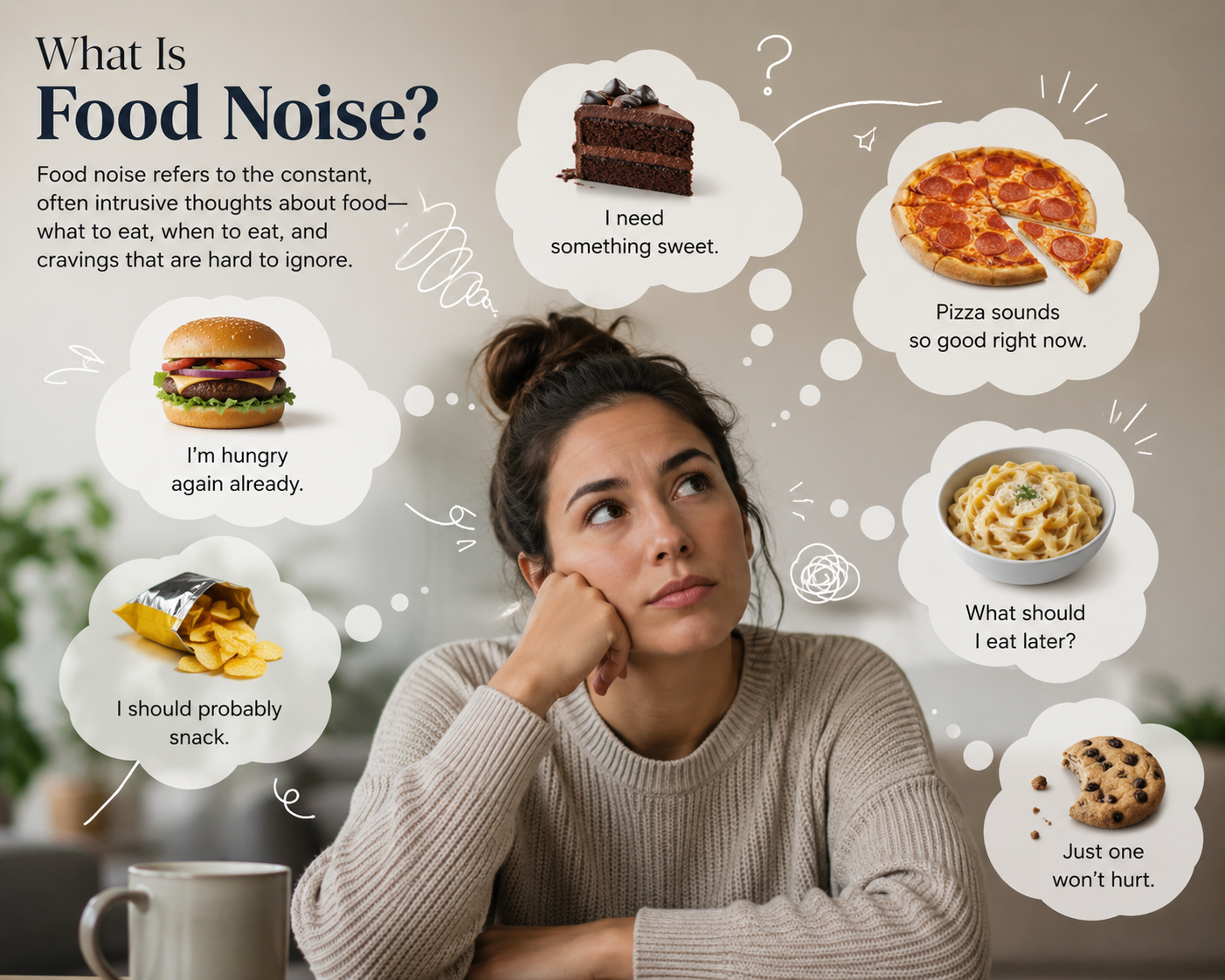
You just finished a meal. You're not hungry. But your mind is already drifting to what you'll eat next — or replaying the snack you had an hour ago, or calculating whether you "deserve" dessert tonight.
This relentless mental chatter around food has a name: food noise.
For many people struggling with weight, food noise isn't a matter of willpower or discipline — it's a biological signal driven by hormones, brain chemistry, and appetite-regulating pathways. Understanding it is the first step toward managing it.
At MedLeanRx, our physician-guided GLP-1 programs are designed to address the root causes of food noise — not just the symptoms. Learn about our Texas GLP-1 program →
What Is Food Noise?
Food noise refers to the constant, often intrusive thoughts about food — what to eat, when to eat, and cravings that are hard to ignore. It's the mental background hum that makes it difficult to focus, relax, or feel satisfied after eating.
Common examples of food noise include:
- Thinking about your next meal immediately after finishing one
- Feeling mentally preoccupied with food even when you're not physically hungry
- Struggling to resist cravings despite wanting to
- Eating past fullness because the urge to keep eating feels overwhelming
- Feeling like food is constantly "calling" to you
Food noise is not a character flaw. It's a physiological experience — and for many people, it's one of the biggest barriers to sustainable weight loss.
Why Does Food Noise Happen?
Food noise is largely driven by the brain's reward and hunger signaling systems. Several biological factors contribute:
Common causes of food noise:
- Imbalanced hunger hormones (ghrelin, leptin, insulin)
- Dopamine-driven reward responses to high-calorie foods
- Blood sugar fluctuations that trigger cravings
- Chronic stress and elevated cortisol levels
- Poor sleep affecting appetite-regulating hormones
- Highly processed foods that override natural fullness signals
For some individuals, the brain's hunger and reward circuits are simply more active — making food thoughts louder and harder to quiet through willpower alone.
How GLP-1 Medications May Help Reduce Food Noise
GLP-1 receptor agonists — such as semaglutide and tirzepatide — work in part by targeting the same brain pathways involved in hunger and reward signaling.
Many patients on GLP-1 therapy report a dramatic reduction in food noise. They describe it as the mental chatter around food simply "going quiet" — often for the first time in years.
GLP-1 medications may help by:
- Reducing appetite signals from the brain
- Slowing gastric emptying so fullness lasts longer
- Dampening the dopamine-driven reward response to food
- Stabilizing blood sugar to reduce cravings
- Helping patients feel satisfied with smaller portions
"I didn't realize how loud my food thoughts were until they finally went quiet." — A common experience reported by patients on GLP-1 therapy.
Is GLP-1 Treatment Right for You?
GLP-1 medications are not one-size-fits-all. A licensed physician should evaluate your health history, goals, and current medications before recommending a treatment plan.
You may be a candidate if you:
- Have a BMI of 27 or higher
- Struggle with persistent food cravings or appetite control
- Have tried diet and exercise without lasting results
- Are looking for physician-supervised, medically backed support
- Want a fully online, convenient care experience
At MedLeanRx, our provider reviews your intake within 24–48 hours and creates a personalized treatment plan — all 100% online, no clinic visits required.
Managing Food Noise Beyond Medication
While GLP-1 medications can significantly reduce food noise, a comprehensive approach supports the best long-term outcomes.
Complementary strategies that may help:
- Eating regular, balanced meals to stabilize blood sugar
- Prioritizing protein and fiber to support satiety
- Improving sleep quality to regulate hunger hormones
- Managing stress through movement, mindfulness, or therapy
- Limiting ultra-processed foods that amplify cravings
- Working with a physician to monitor progress and adjust your plan
Physician-guided care combines medical treatment with lifestyle support — giving you the tools to address food noise from multiple angles.
Why Physician-Guided Care Makes a Difference
Addressing food noise effectively requires more than a prescription. It requires a personalized, medically supervised approach that adapts to how your body responds.
Benefits of physician-guided weight loss care:
- Personalized dosing based on your health profile
- Ongoing monitoring for side effects and progress
- Nutrition and lifestyle guidance alongside medication
- Safe titration to minimize discomfort
- A licensed provider available to answer your questions
When food noise is addressed medically and holistically, patients often find it easier to make healthier choices — not because they're forcing themselves, but because the mental drive to overeat has quieted.
Semaglutide Weight Loss in Houston, TX
Physician-guided semaglutide programs for Houston patients
Ready to quiet the food noise?
Complete your quick online assessment and a licensed physician will review your health profile to determine if GLP-1 treatment is right for you.
Start My AssessmentTakes 5 minutes · No commitment required